

Table of Contents
- Electric Cargo Bike Price Ranges: What Families Actually Pay
- What Drives the Cost of an Electric Cargo Bike
- E-Bike vs Car Cost Comparison: The Real Numbers
- Electric Cargo Bike Maintenance Costs Over Time
- Hidden Costs: Accessories, Insurance, and Depreciation
- Factory-Direct vs Retail E-Bike Pricing Explained
- Used Market and Tax Incentives: Cutting Your Upfront Cost
- Conclusion
Last Updated: August 23, 2026
Electric Cargo Bike Price Ranges: What Families Actually Pay
The electric cargo bike market has expanded dramatically, and families shopping for the first time are often surprised by the price spread. The honest answer to "what does a family electric cargo bike cost?" is: anywhere from around $1,500 for a basic entry model to well over $8,000 for a premium long-tail or front-loader. That range reflects genuine differences in motor quality, frame engineering, battery capacity, and long-term durability.
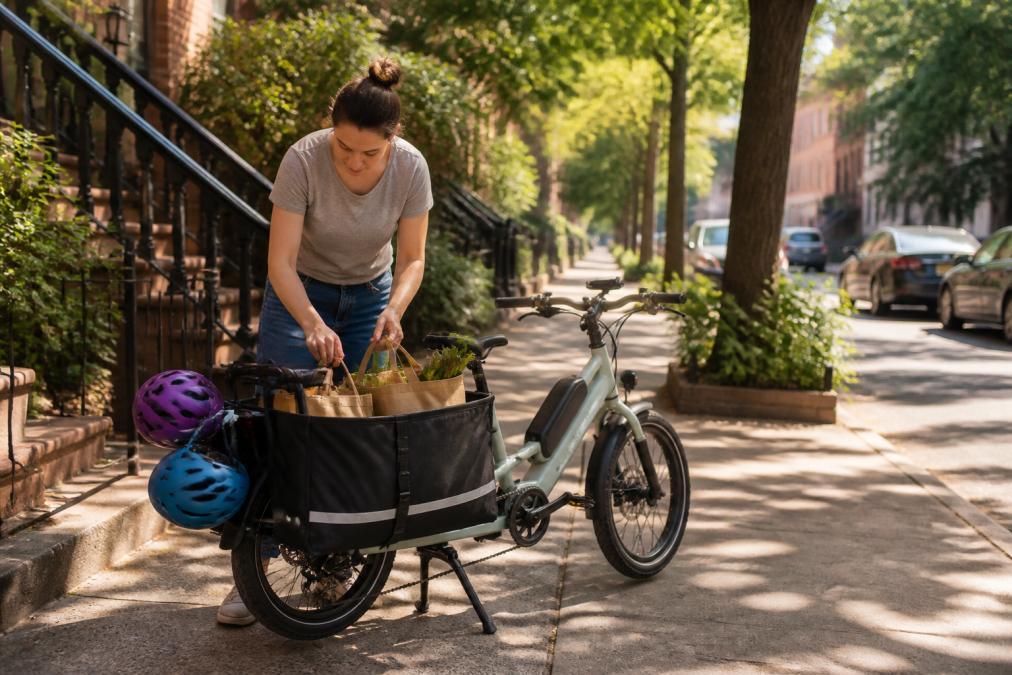
Before you anchor on sticker price, understand that upfront cost is only part of the story. The sections below break down what you actually get at each tier, what drives cost differences, and where families tend to overpay or underinvest.
Entry-Level Models ($1,500-$2,500)
Entry-level electric cargo bikes typically use rear hub motors in the 500W-750W range and smaller battery packs delivering 20-35 miles of real-world range under load. Frame materials are usually steel, which adds weight but keeps costs low. Hauling capacity is generally limited to around 250-300 lbs total, workable for one child and a grocery run.
The biggest limitation at this price point is the braking system. Many entry-level models ship with mechanical disc brakes rather than hydraulic, which means longer stopping distances under load, a meaningful safety tradeoff for urban riding with children on board. These bikes suit light-duty use: solo commuting with occasional cargo, or a single child seat.
Mid-Range Models ($2,500-$4,500)
The mid-range is where most serious family buyers land. At this tier, you start seeing mid-drive motors, hydraulic disc brakes, integrated lighting, and longer battery range of 40-55 miles. Frame geometry improves, with step-through designs becoming more common, critical for riders loading and unloading kids multiple times daily.
Hauling capacity typically increases to 350-400 lbs, and cargo integration gets more thoughtful: built-in racks, compatible child seat mounts, and integrated panniers. The pedal-assist system also tends to be more refined, with torque sensors rather than cadence sensors, producing a more natural, responsive ride feel. This is the tier where an electric cargo bike genuinely functions as a car replacement for many families.
Premium and Long-Tail Models ($4,500 and Up)
Above $4,500, you are paying for purpose-built engineering. Long-tail cargo bikes, front-loader designs, and bakfiets-style models are built around hauling capacity as the primary design goal. Load capacities of 400-550 lbs are common. Battery systems often support dual-battery configurations for extended range beyond 60 miles. Mid-drive motors with high torque output handle steep grades without straining.
Front-loader and bakfiets formats deserve special mention for families with young children: the cargo box sits in front of the rider, keeping kids visible at all times. Premium models also tend to have better accessory ecosystems, weather canopies, cargo bags, child harnesses, that integrate cleanly rather than requiring improvised solutions.
| Price Tier | Typical Motor | Range (Loaded) | Best For |
|---|---|---|---|
| $1,500-$2,500 | Rear hub, 500-750W | 20-35 miles | Light commuting, one child |
| $2,500-$4,500 | Mid-drive, 500-750W | 40-55 miles | Family errands, car replacement |
| $4,500+ | High-torque mid-drive | 50-70+ miles | Heavy hauling, two+ children |
What Drives the Cost of an Electric Cargo Bike
Most buyers assume price differences come down to brand markup. The real picture is more nuanced, and understanding it helps you evaluate whether a given bike is priced fairly.
Motor Type: Mid-Drive vs. Rear Hub
The choice between a mid-drive motor and a rear hub motor is the single biggest cost driver in the drivetrain. A rear hub motor is simpler to manufacture and easier to replace, keeping costs lower. It delivers power directly to the rear wheel, which works adequately on flat terrain. Under load on hills, hub motors struggle because they cannot take advantage of the bike's gearing.
A mid-drive motor sits at the bottom bracket and drives the chain, working through the bike's existing gear system. The result is significantly better hill-climbing performance under load, critical when carrying 60 lbs of groceries and two children up a bridge or overpass. Mid-drive motors also produce a more natural pedal-assist feel, particularly with a torque sensor. For family cargo use, the performance difference is worth the added cost.
Frame Design and Hauling Capacity
Frame engineering for a cargo bike is fundamentally different from a standard commuter frame. A long-tail frame extends the rear to create a larger platform for passengers and cargo. A front-loader or bakfiets design places the cargo box between the front wheel and handlebars. Both require purpose-built geometry, reinforced tubing, and specific component specifications to handle asymmetric loads safely.
The deep step-through frame design, common on quality cargo bikes, adds manufacturing complexity but dramatically improves usability for daily loading and unloading. An enclosed drivetrain protects the chain from weather and debris, extending service life significantly. Hauling capacity reflects the structural rating of the frame, fork, and wheel builds. Buying below your actual load needs is a common and expensive mistake.
Battery Range and Performance
Battery capacity is measured in watt-hours (Wh). A 500Wh battery delivers roughly 30-45 miles of assisted range under normal conditions. A 750Wh battery extends that to 45-65 miles. Actual range drops under heavy load, at higher speeds, on hilly terrain, and in cold weather.
For families using an electric cargo bike as a primary transportation tool, the ability to add a second battery, effectively doubling your range, is a feature worth paying for upfront. Battery quality also affects longevity, as cheaper cells degrade faster, meaning your range shrinks more quickly over the bike's life.
E-Bike vs Car Cost Comparison: The Real Numbers
Replacing car trips with an electric cargo bike is one of the most financially compelling decisions a family can make, but the math only works with accurate numbers.
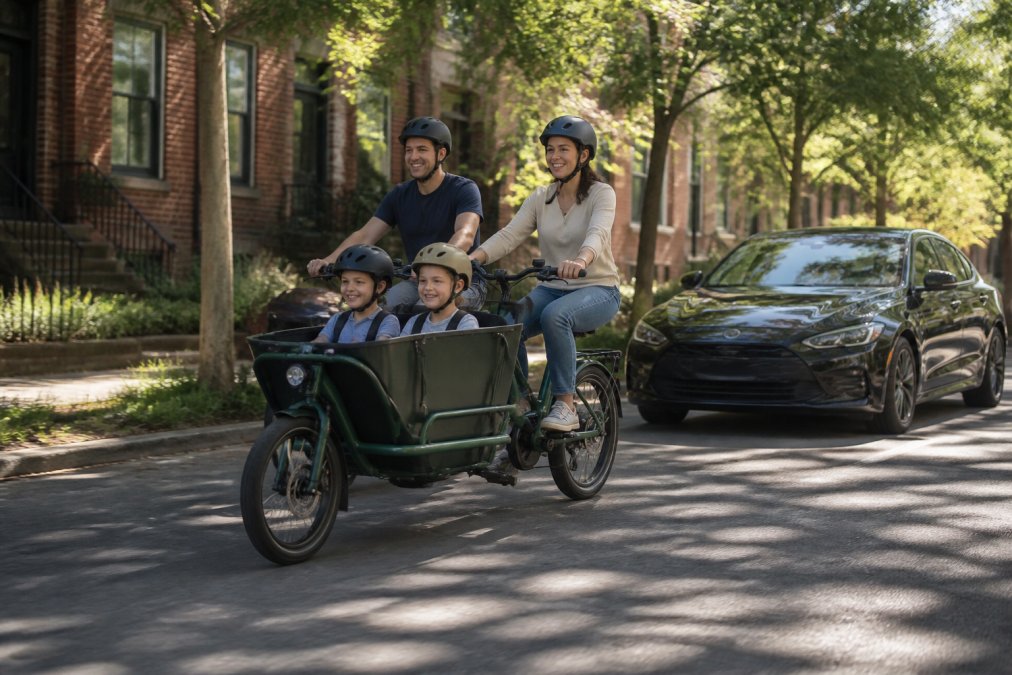
According to AAA's annual Your Driving Costs study, the average annual cost of owning and operating a new vehicle in the United States exceeds $12,000 when you factor in depreciation, insurance, fuel, maintenance, and financing.
An electric cargo bike costs roughly $50-$150 per year in electricity to charge, depending on local rates and distance ridden. Maintenance runs higher than a standard bike but is a fraction of car maintenance costs. Insurance is optional in most states and typically under $200 annually when purchased.
The breakeven point for most families replacing even one car trip per day is under two years. For families who can eliminate a second vehicle entirely, the financial case is overwhelming.
Join the Founding Fleet — $2,595 →
Electric Cargo Bike Maintenance Costs Over Time
The ongoing cost of owning an electric cargo bike is where many buyers are caught off guard. The upfront price is visible; the maintenance costs are not.
Routine Maintenance and Charging Costs
Routine maintenance covers the same basics as any bike: brake pad replacement, tire changes, chain lubrication, cable adjustments, and periodic drivetrain cleaning. An enclosed drivetrain reduces chain wear and cleaning frequency significantly. Annual maintenance costs for a well-maintained cargo e-bike typically run $150-$400, depending on usage and whether you handle basic tasks yourself.
Charging costs are negligible. A full charge from empty on a 500Wh battery costs roughly 5-8 cents at average U.S. electricity rates.
Battery Replacement and Drivetrain Wear
The most significant long-term cost is battery replacement. Lithium-ion batteries are typically rated for 500-800 full charge cycles before capacity degrades noticeably (peer-reviewed research). For a rider charging every other day, that translates to roughly 3-5 years before range starts declining meaningfully. Replacement batteries for quality cargo e-bikes generally cost $400-$800, depending on capacity and brand.
Drivetrain wear depends heavily on load and terrain. Chains, cassettes, and chainrings on a heavily loaded cargo bike wear faster than on a standard commuter. Budgeting $100-$200 annually for drivetrain consumables is reasonable for daily family use.
Hidden Costs: Accessories, Insurance, and Depreciation
The base price of an electric cargo bike rarely includes everything you need for family transport. Child seats, weather canopies, cargo bags, additional panniers, locks, helmets, and lighting accessories can add $300-$1,200 to your total outlay. A quality cargo-specific lock alone runs $60-$120. Before purchasing, verify that the accessories you need are either included or explicitly compatible.
Insurance is worth discussing separately. Most standard homeowners and renters insurance policies provide limited coverage for bicycles. Dedicated e-bike insurance policies typically run $100-$200 per year for a cargo bike and cover theft, damage, and liability. For a bike costing $3,000-$6,000, skipping insurance is a meaningful financial risk.
Depreciation is the hidden cost nobody talks about but every buyer should understand. A well-maintained cargo e-bike retains 50-65% of its value after two years in most markets.
Factory-Direct vs Retail E-Bike Pricing Explained
The retail markup on electric cargo bikes is substantial. Traditional bike retail involves the manufacturer, a distributor, and a local dealer, each adding margin. By the time a bike reaches the shop floor, the retail price often reflects 80-120% markup over the manufacturer's cost.
Factory-direct brands bypass that chain entirely. The manufacturer sells directly to the consumer, delivering a comparable or superior product at significantly lower cost. This is the model Avocado Bikes operates on: factory-direct pricing that brings a high-torque 750W mid-drive cargo bike with hydraulic disc brakes, integrated lighting, and 80L expandable panniers to market at a price point that retail distribution simply cannot match.
The tradeoff with factory-direct purchasing is the inability to test-ride before buying. The best factory-direct brands address this through detailed specifications, transparent return policies, and responsive customer support. When evaluating a factory-direct cargo e-bike, ask for the warranty terms in writing, confirm whether service is handled by mail or through a local network, and check whether replacement parts are stocked domestically.
Used Market and Tax Incentives: Cutting Your Upfront Cost
The used electric cargo bike market is growing and represents a genuine opportunity for budget-conscious families. A two-year-old cargo e-bike with documented maintenance history and a battery that has been through fewer than 300 charge cycles is often a sound purchase at 40-55% of its original retail price.
When buying used, battery health is critical. Ask for the charge cycle count if the bike's app or display tracks it. Inspect the frame for cracks, particularly at weld points and around the bottom bracket. Test all assist levels and confirm the motor engages smoothly. A used bike needing new brake pads and a chain is a minor expense. One with a degraded battery or cracked frame is a liability.
On the incentives side, families should check IRS guidance on clean vehicle credits for current eligibility, as cargo e-bikes may qualify depending on applicable legislation. Several states and municipalities also offer rebate programs for electric bikes purchased as car replacements. These programs vary significantly by location and funding availability, so verify current status directly with your state energy office or local transit authority before factoring any rebate into your purchase decision.
The true cost of a family electric cargo bike is not a single number. It is a combination of purchase price, accessories, maintenance, battery longevity, and what you stop spending on car ownership. Families who do that math honestly almost always find the case compelling. Avocado Bikes was built around that calculation: factory-direct pricing on a 750W mid-drive cargo bike with hydraulic disc brakes, 80L integrated panniers, and range up to 60 miles with an optional second battery. Join the Founding Fleet and get access to a premium electric cargo bike at nearly 50% below what the same specification would cost through traditional retail.
Frequently Asked Questions
Q: What is the average cost of a family electric cargo bike?
A: Family electric cargo bikes span a broad range depending on motor type, frame style, and build quality. Entry-level models with rear hub motors and basic load capacity start around $1,500-$2,500. Mid-range bikes with mid-drive motors, hydraulic disc brakes, and expanded hauling capacity typically fall between $2,500 and $4,500. Premium long-tail and front-loader models designed to carry two children plus cargo regularly exceed $4,500. Factory-direct options can significantly reduce what you pay compared to retail-channel pricing.
Q: Why are cargo e-bikes so expensive?
A: Cargo e-bikes cost more than standard e-bikes because they require reinforced frames engineered for high load capacity, larger-capacity batteries for adequate range under heavy loads, and higher-torque motors, often mid-drive, to handle that weight on hills. Add hydraulic disc brakes, integrated lighting, accessory compatibility systems, and quality drivetrain components, and the bill adds up fast. The good news is that the total cost of ownership, measured against car ownership or frequent rideshare use, often makes the upfront price look reasonable within one to two years.
Q: Do electric cargo bikes qualify for any tax incentives or rebates?
A: Federal tax incentives for e-bikes have been proposed in Congress but have not passed into law as of 2026. However, many states, counties, and utilities offer their own rebate programs that can cut the purchase price by $200 to $1,500 or more. Check your state energy office and local utility provider for current offers. Some employers also offer commuter benefits that can be applied to e-bike purchases. Availability and amounts vary by location, so confirm eligibility before buying.
Q: What hidden costs should I consider when buying an electric cargo bike?
A: Beyond the sticker price, budget for accessories that make the bike genuinely useful: child seats or a cargo box, rain covers, a quality lock, and a helmet. These can add $200-$800 depending on what you need. Annual maintenance, brake pads, tires, drivetrain service, runs roughly $100-$300 per year. A battery replacement, typically needed after 500-1,000 charge cycles, can cost $400-$700. Some riders also add insurance, which runs $100-$200 annually. Factoring these in gives a much clearer picture of true ownership cost.
This article was written using GrandRanker

